"Change is inevitable … and fast. Our experts use a tested method to identify, roll out and track actions — with full governance and transparency throughout."
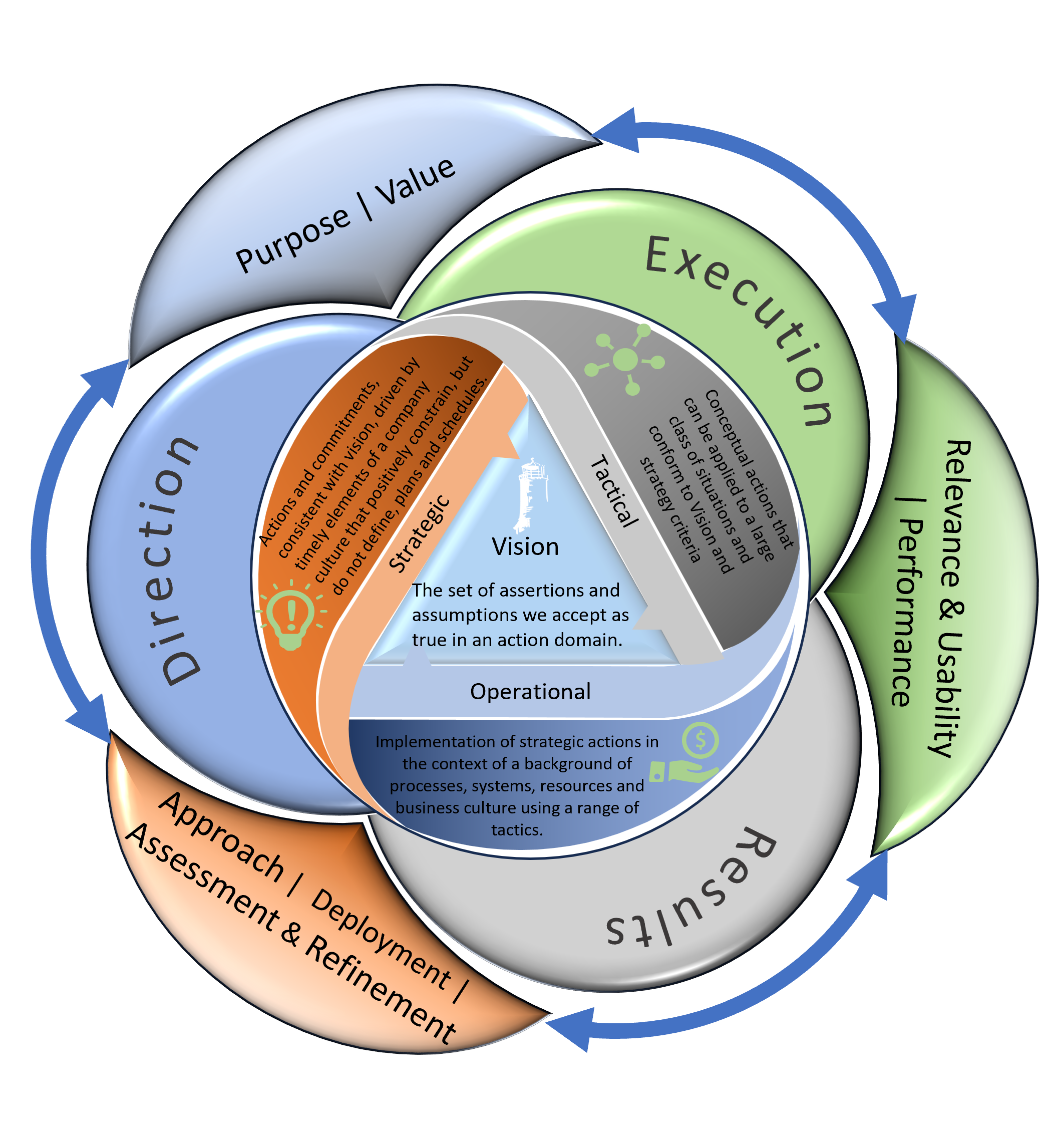
The 5 Processes form the backbone of the ATLAS system. They are continuous and transparent, with different owners but full governance. Decisions are made as needed with full disclosure — and remain dynamic as more data, information, and knowledge is captured.
These processes are not a linear checklist but an interconnected management system. KPIs and decisions are aligned across all five so that your organisation can act coherently — never having to say "we can't do that idea because we don't have the budget."
"Would you tell me, please, which way I ought to go from here? That depends a good deal on where you want to get to." — Lewis Carroll's Alice in Wonderland opens this process for a reason. Companies seeking differentiation and growth must pursue intentional strategy rather than random direction.
Piloting examines your business through a future-oriented lens using two proven transitional tools — not because competitors are using them, but because they work for your unique context.
"Where we are going, not where we have been — that is the starting point for every engagement."
Functional owner workshops in shared settings reveal strengths and weaknesses. The integrated approach breaks silos and develops encompassing strategies that account for real resource allocation and timelines. Stakeholder values are incorporated alongside traditional business logistics.
Extends shareholder perspectives to include the full range of stakeholder views for a comprehensive organisational assessment. Where does your business fit in the future landscape? How fast do you need to move? Where are the real opportunities?
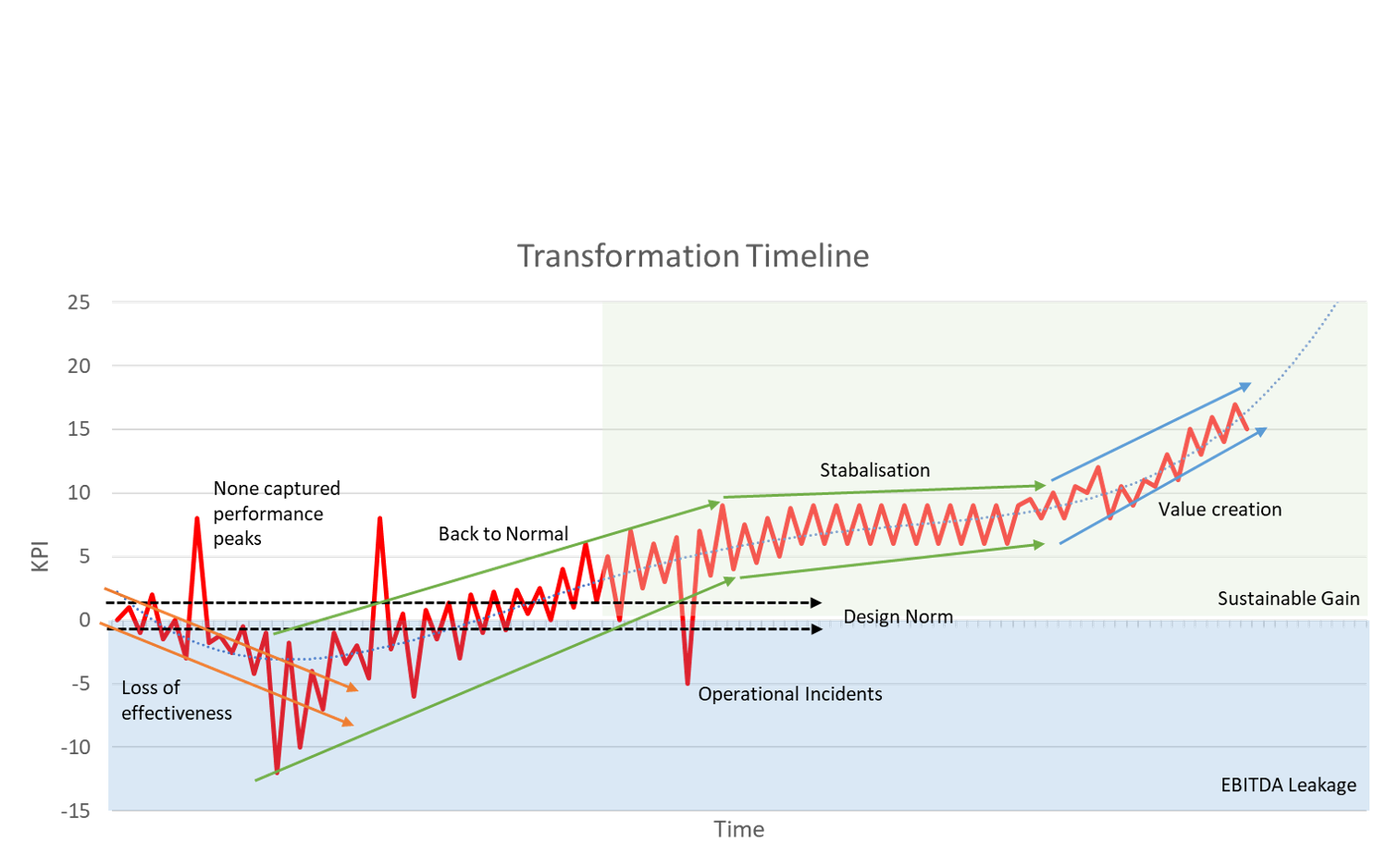
"Productivity needs to improve! Assets need to be stable! Costs are too high! Where are all the management gains you told me about?" — These are the pressures that define the starting point for Strategic Planning and Alignment.
Most mature businesses implement transformation because markets have shifted. The typical response — staffing reductions, inventory optimisation, operating cost cuts — generates short-term gains but inhibits innovation and limits revenue growth. This process goes further.
"After stabilising operations and improving productivity, we incorporate innovation and strategic direction — ensuring investments align properly rather than simply protecting last year's results."
The cycle most businesses are caught in:
AT-IPIC brings a significant advantage to your management decision-making through the Lighthouse concept — not a control tower that looks inward and reacts, but a lighthouse that continuously scans the horizon in all directions.
Consolidation and Review performs three essential functions simultaneously, combining new ideas with implementation feedback and providing a transparent platform for strategic review and resource prioritisation.
"The costs of implementing new ideas and the costs of mitigating the risks associated with old ideas are compared — on equal terms, without the cognitive biases that typically skew investment decisions."
Looks inward. Reacts to what has already happened. Fixed vantage point. Information flows up and is filtered.
Scans all directions. Anticipates. Warns early. Information is transparent and actionable at every level.
Ensuring proper funding allocation, continuously reviewing decisions, and identifying opportunities — all while maintaining full transparency and clear action ownership.
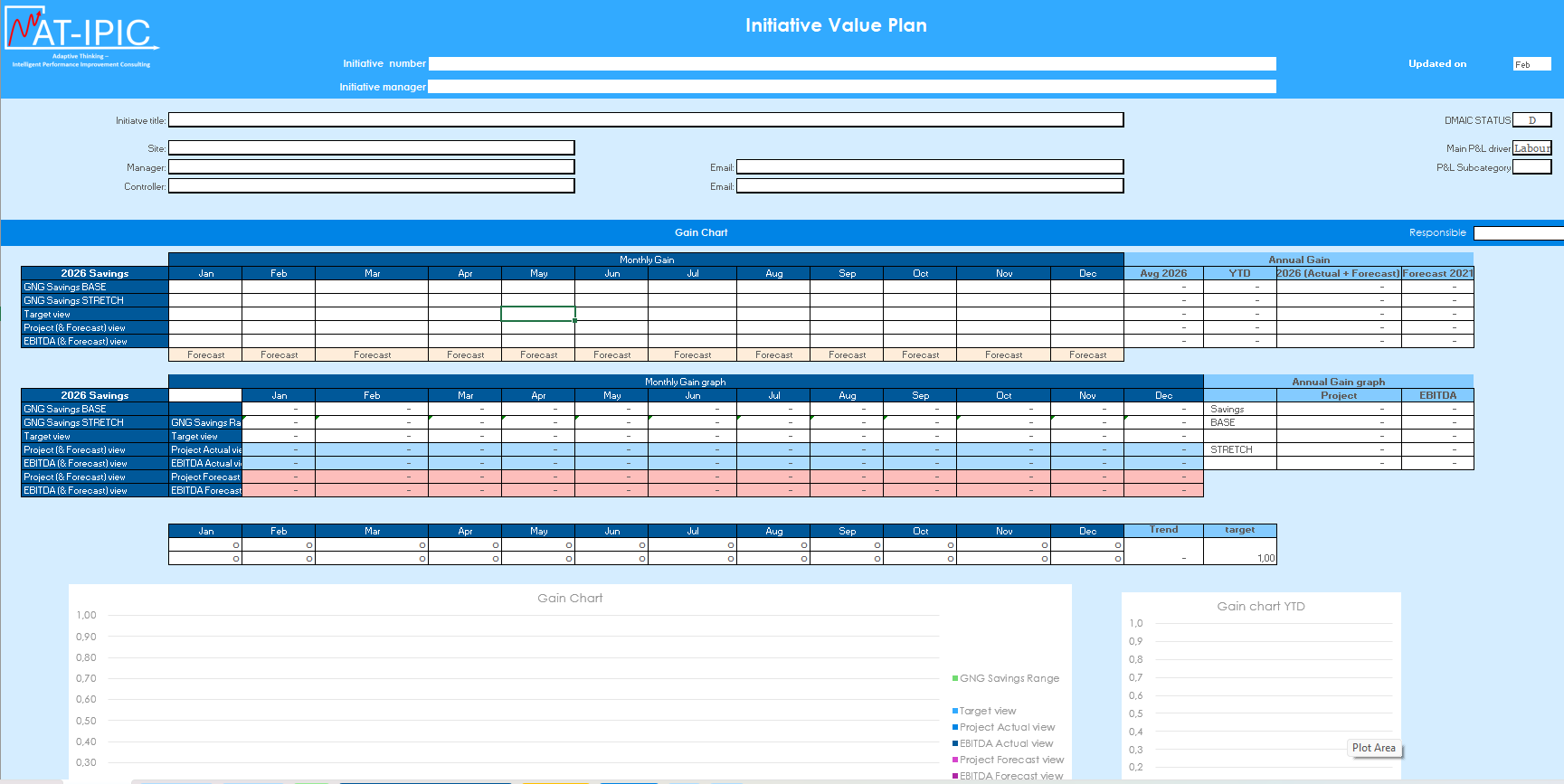
Two central concerns drive this process: EBITDA growth and value realisation. "Many clients have the experience that the reported gain is never realised in the actual financial figures." This gap between planned and realised value is precisely what this process is designed to close.
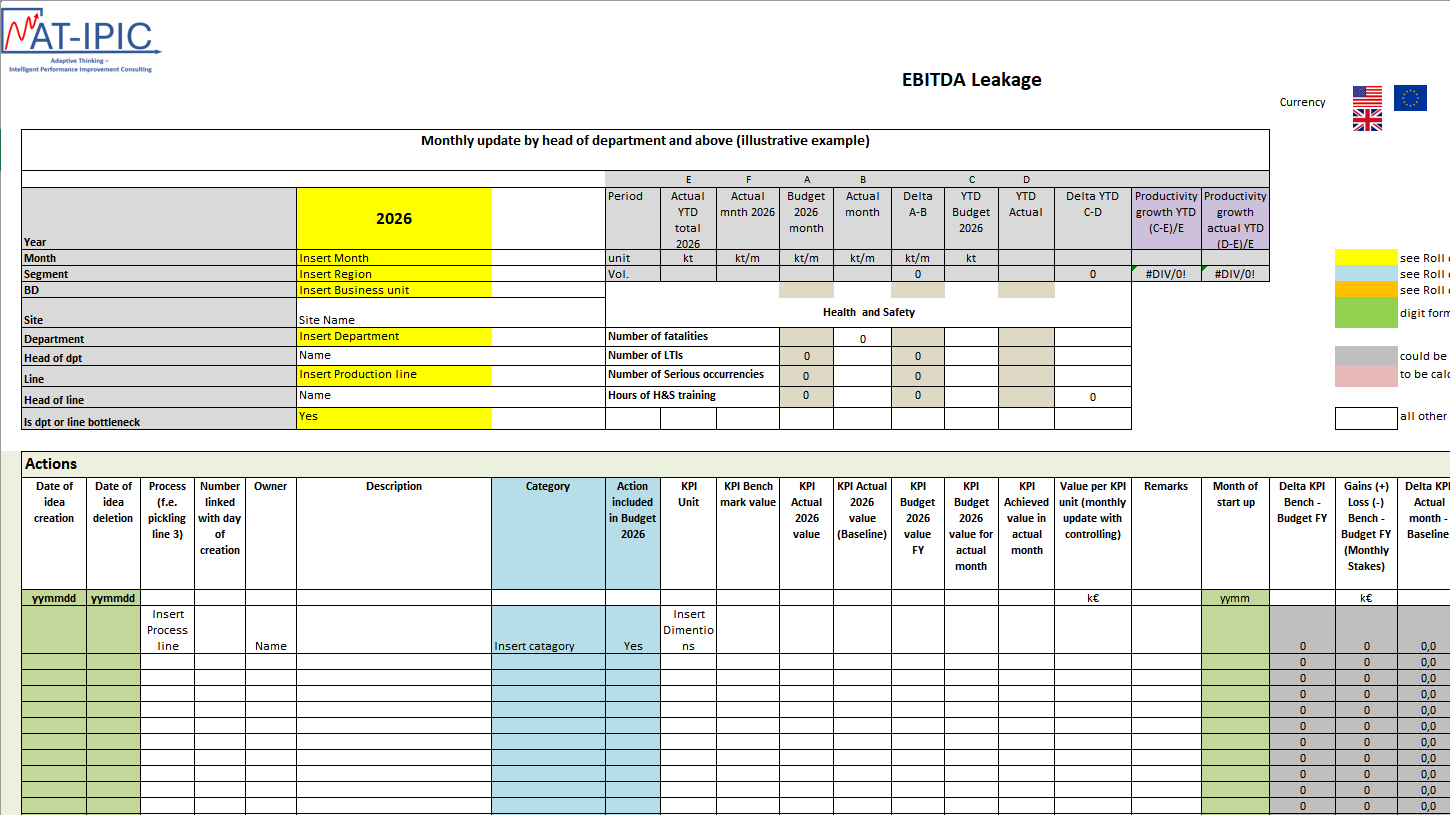
By converting the EBITDA bridge into a genuine managerial tool with transparent metrics, operations teams can act decisively and allocate resources precisely and effectively.
"Value plan actions are overestimated and leakage underestimated — not through dishonesty, but through the cognitive biases that come with proximity to your own operations."
Gains fail to materialise due to reliability issues, quality problems, and operational instability. The bridge between "planned" and "achieved" is where most value disappears.
Value plan actions are systematically overestimated while leakage is underestimated — a natural consequence of working inside your own system without external benchmarking.
Poor project management and unclear ownership reduce expected gains. Without transparent tracking, the best ideas simply fail to deliver their full potential.
"Reporting has a tendency to flow upwards. Information becomes more confidential … and smothers insight." This is the central paradox of most reporting systems — the people who need information to create or preserve value are the last to receive it.
The Insight process democratises performance data, ensuring that transparency flows downward to where value is actually created and lost — giving production and operations teams the analytical capability they need.
By implementing the two pillars of transparency, organisations gain superior analytical capabilities for making informed investment decisions, identifying EBITDA leakage, locating cost-benefit opportunities, and improving operational stability.
"We don't draw conclusions … we create insight. The difference is that conclusions are passive and insight is actionable."
Reveals financial flows across operations — not just at the management level, but at the operational level where cost decisions are actually made. Makes the true cost of every action visible and comparable.
Shows where processes occur, where bottlenecks form, and where operational incidents are creating value loss. Connects production reality to financial outcomes in real time.
See how the 5 processes are delivered through 7 structured, sequenced modules.