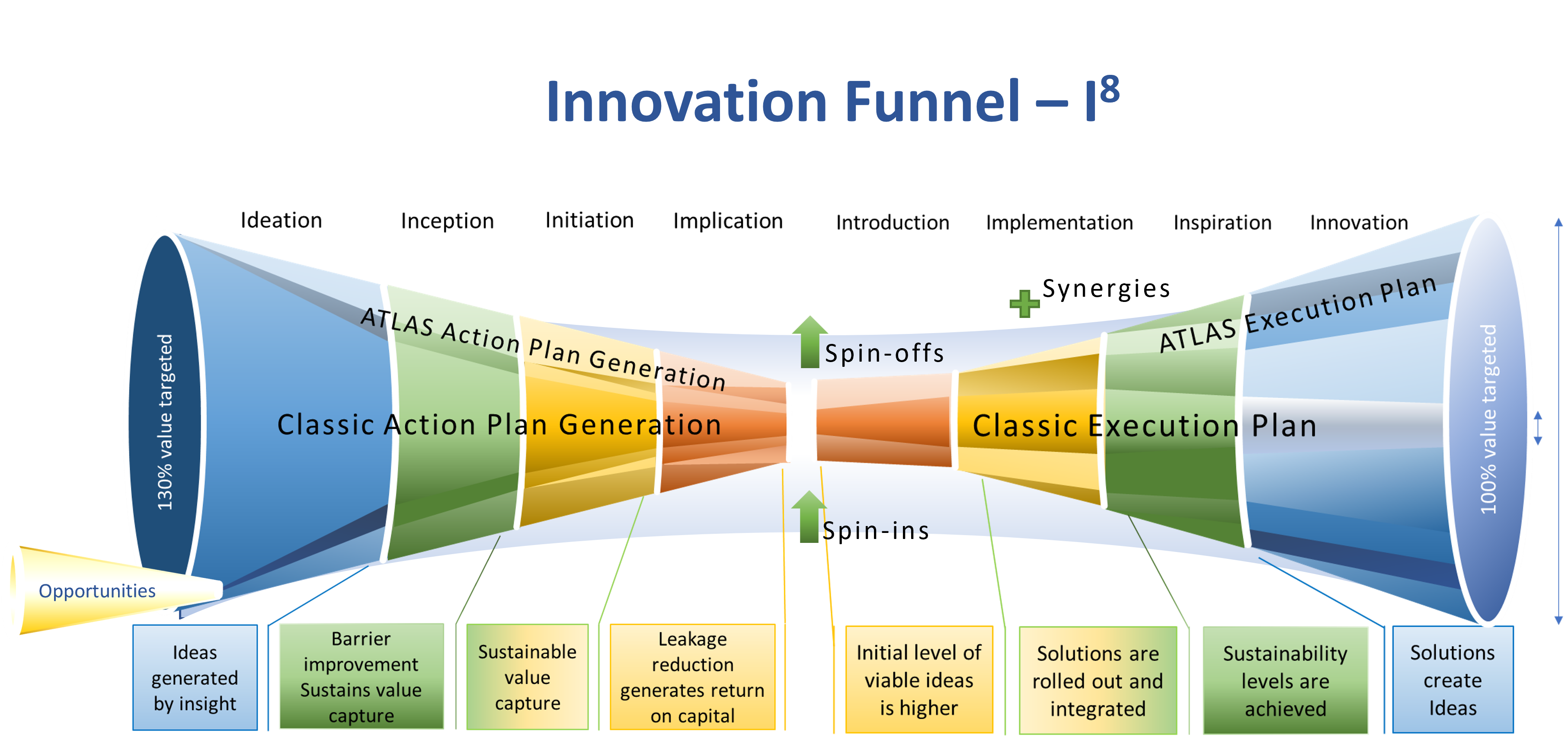
"We have divided the complex business process into smaller, simple modules. Each can be implemented at different speeds, in different locations, at different times."
The 7 Modules translate the ATLAS framework into practical, sequenced implementation steps. They can be adopted progressively — starting where your organisation needs most support — and build upon each other to create a comprehensive performance transformation system.
"Transparency and clarity on the direction, the goals and milestones needed are the precursor for brainstorming. Ideas, mitigation actions, and windows of opportunity are captured and valued to ensure a level playing field is created."
A company's vision is distinctive and individual. Consequently, it is vital to obtain impartial, transparent feedback to help an organisation navigate the unpredictability of future conditions.
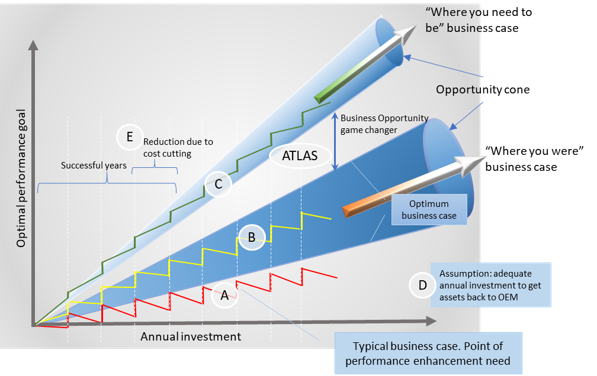
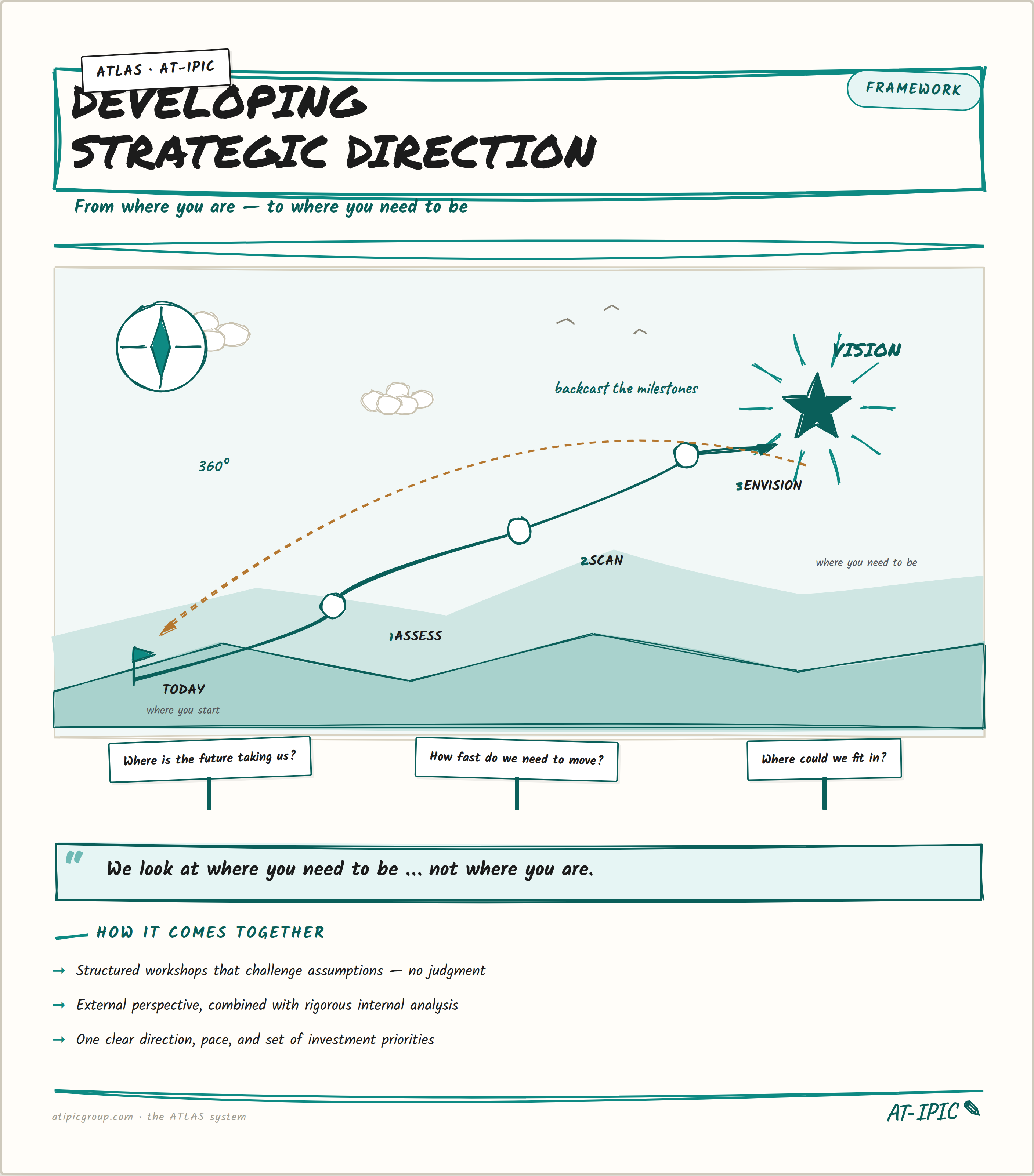
"We look at where you need to be … not where you are."
The vision creation process considers three fundamental questions: Where is the future taking us? How fast do we need to move? And where could we fit in? AT-IPIC facilitates structured conversations and workshops exploring potential future business scope, identifying challenges, and recognising organisational strengths.
Leveraging professional networks, global expertise, and research capabilities, AT-IPIC leads team discussions with objectivity — avoiding recommendations simply because competitors have adopted them. Instead, recommendations align with each organisation's unique capabilities and trajectory.
The 360° Brainstorming module helps organisations avoid siloed thinking by examining their business from multiple perspectives simultaneously.
"Where others define actions based on looking inside … we look outside."
This module employs three core tools to ensure no critical angle is missed:
Strategy Mapping — Examines organisational strengths from multiple viewpoints: what you think you need and actually have, and what your customers and competition think. This extended version incorporates both shareholder and stakeholder value considerations — a critical distinction in today's business environment.
Business Model Canvas — Integrates management and operational floor perspectives to provide transparency about resource allocation and timelines. The enhanced version includes stakeholder values alongside traditional business logistics and distribution views.
Materiality Index — Addresses dynamic supplier and customer needs by helping organisations identify where to focus direction and adapt existing systems. Supports decisions about whether to evaluate current business models or prepare for future stages of development.
The module ensures that organisational actions align with future business requirements rather than solely addressing internal needs and historical patterns.
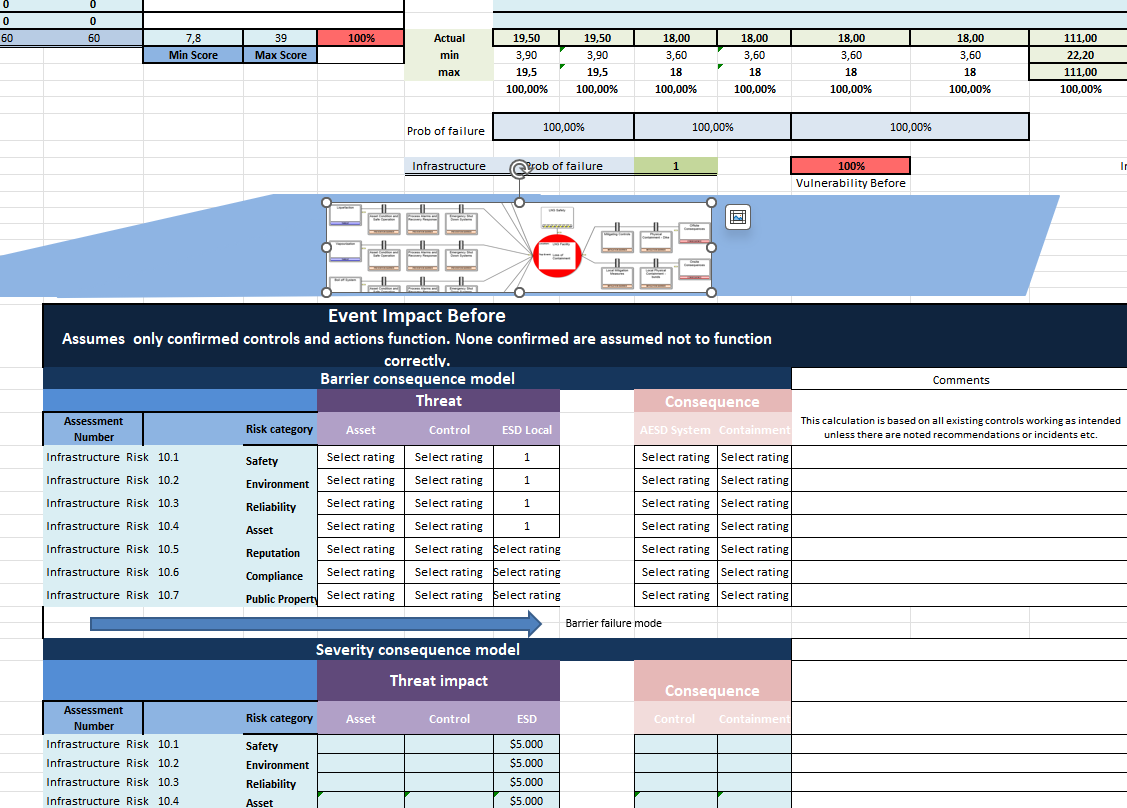
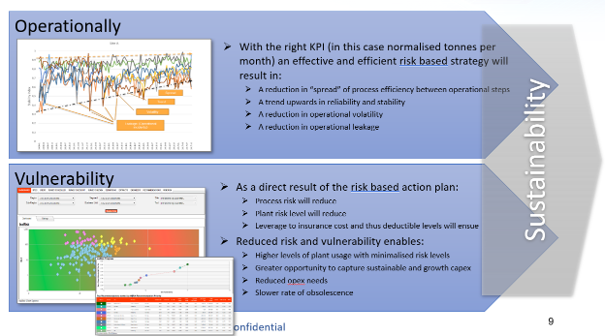
This module focuses on decision-making through risk management integration. The core concept prioritises actions by balancing two dimensions simultaneously — ensuring that growth and vulnerability reduction are pursued together, not in opposition.
"We prioritise actions by integrating growth and vulnerability … making growth sustainable and making investments timely."
Actions are evaluated across two axes: Value creation (determined through controlling department support to establish EBITDA impact on the bottom line) and Risk mitigation (aligned with approaches to minimise asset leakage and stabilise operations).
Value Driver Trees identify which actions most impact incident frequency and distinguish between hard barriers (computer-controlled systems) and soft barriers (procedures and event-focused actions).
HERA Analysis supports decisions about deepening the project portfolio, establishing vulnerability reduction strategies, creating operational stability, and fostering growth initiatives.
This stage produces a defined wave of actions that are valued and measured through company targets and investment protocols — establishing the strategic direction for vulnerability reduction and sustainable growth.
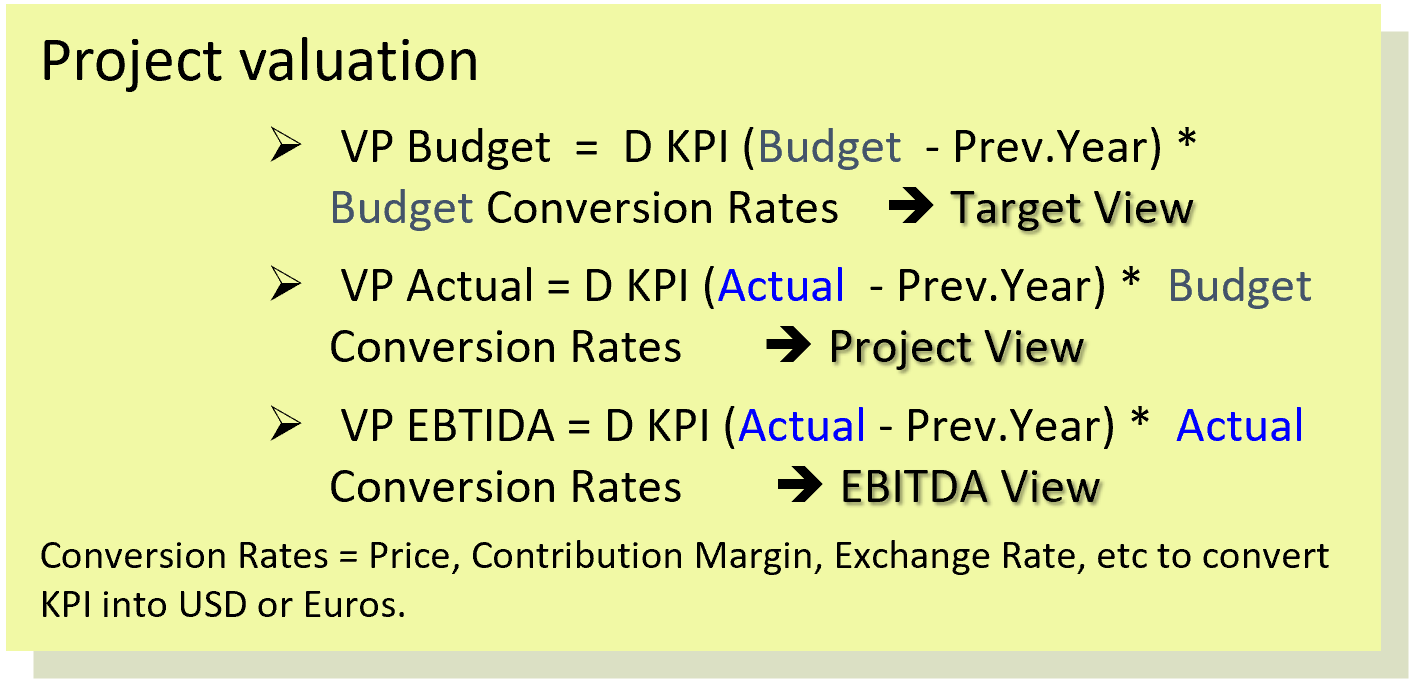
This module addresses three categories of actions that require measurement against a common benchmark — ensuring that all value-creating and risk-mitigating activities are captured, tracked, and given equal analytical treatment.
"One Pager" — Actions identified following an incident to understand precisely where financial losses occur. These are reactive in origin but systematic in capture, ensuring that each incident creates learning that prevents future loss.
"Value Plan" — Actions identified during the project phase designed to enhance project viability and success rates. These are proactive by nature, building the value that justifies investment.
"Leverage" — Opportunities derived from stimulating staff engagement, sharing knowledge, and applying strategic direction. Often the most valuable category because it taps into existing organisational capability that is currently underutilised.
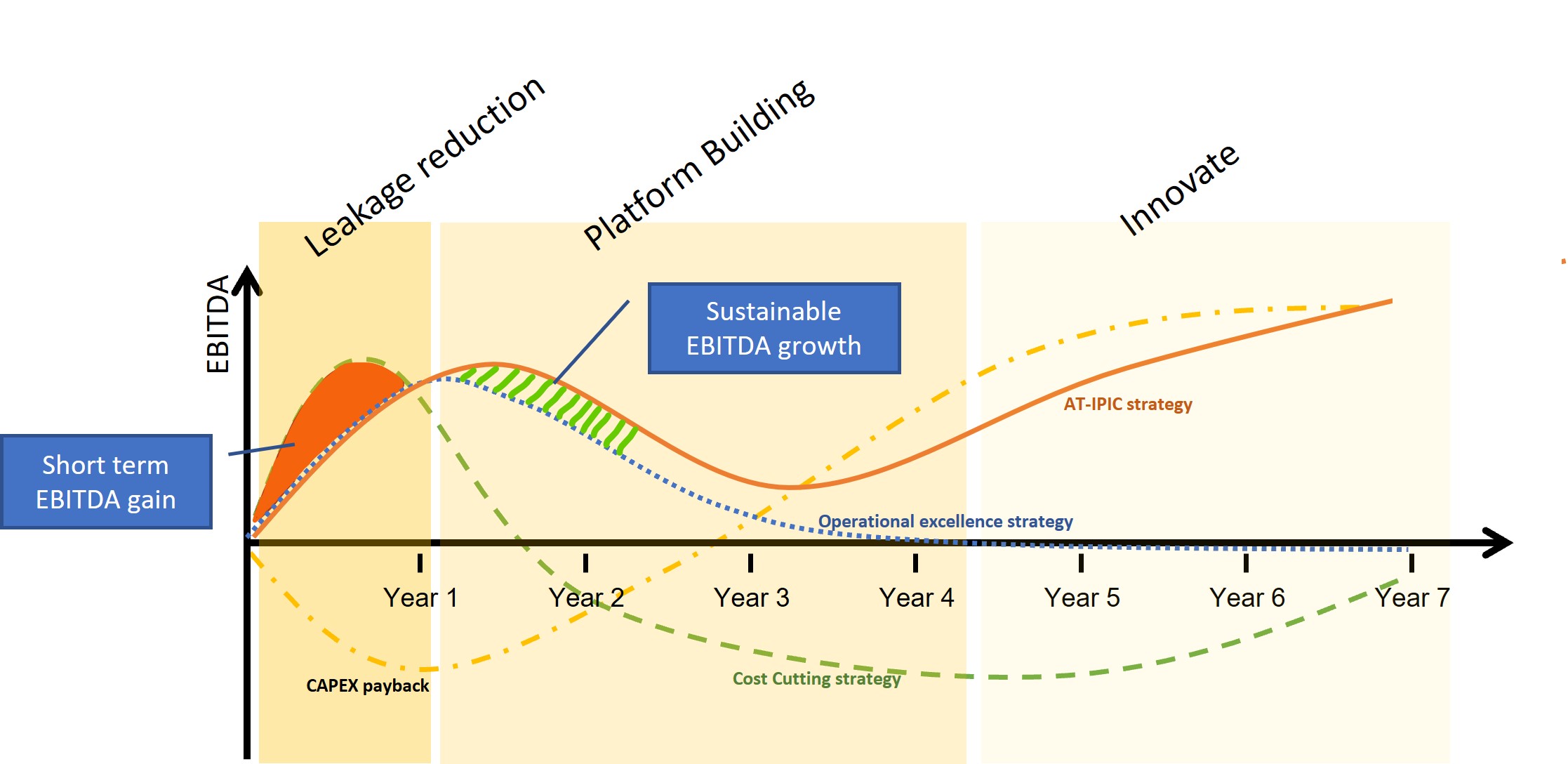
"We help stabilise productivity … making sure you keep any EBITDA you create … providing the platform for growth."
The approach utilises Value Driver Trees adapted from financial methodologies for operational purposes, enabling visualisation of where value creation occurs throughout the organisation and prioritising effort where it will have the greatest impact.
This module addresses the bias that typically distorts project funding decisions — creating transparency around which proposed actions genuinely support strategic objectives and which are driven by historical patterns, departmental politics, or short-term thinking.
"We don't just look at EBITDA growth … we include mitigation cost and window of opportunity … ensuring investment efficiency and sustainability."
The module integrates sales, purchasing, and controlling department perspectives to evaluate how proposed actions align with the company's operational model. By leveraging insights from earlier brainstorming sessions, the team assesses whether prevention actions can be replicated across multiple sites, improving cost-effectiveness and consistency.
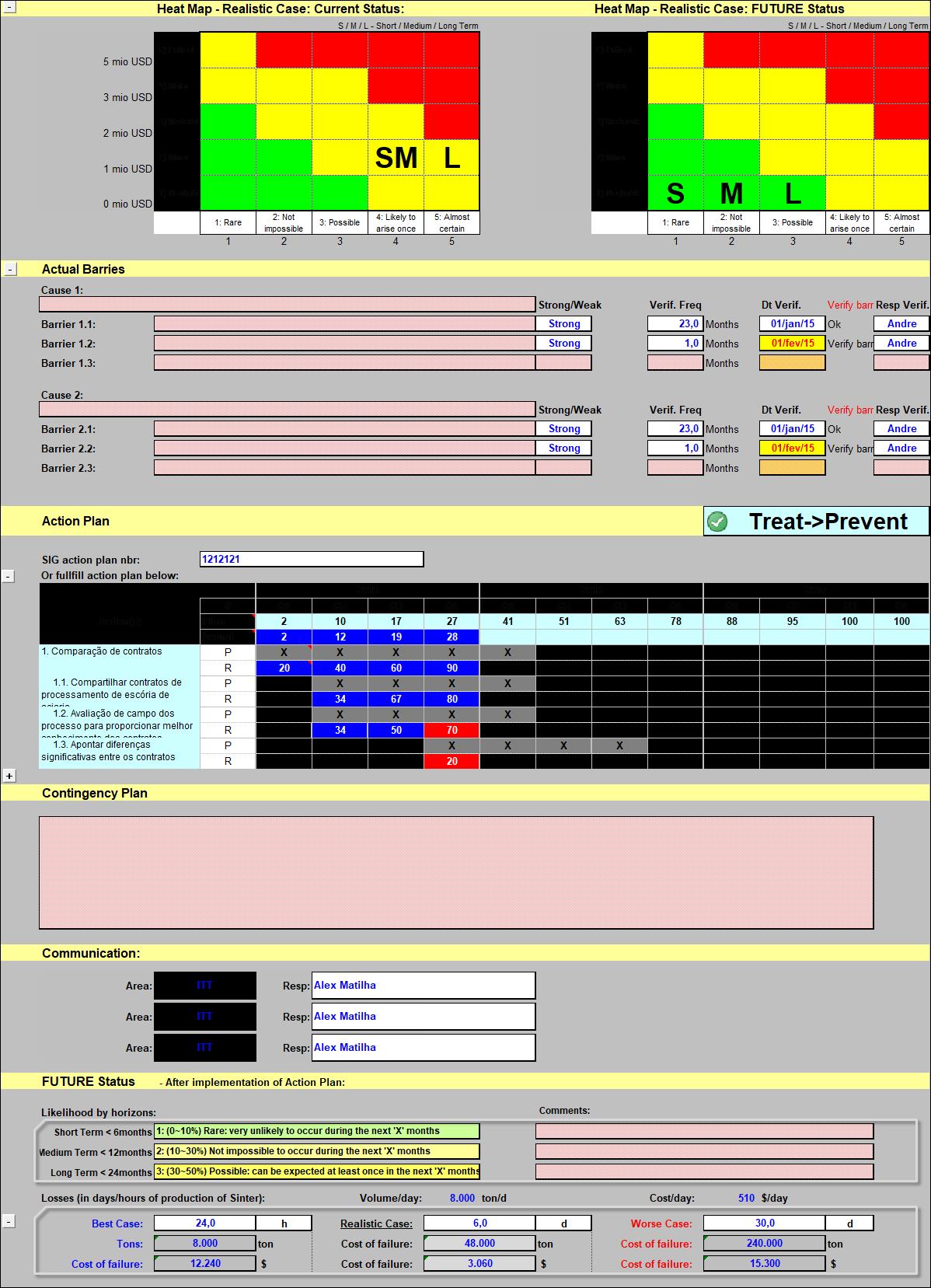
Actions are evaluated through worst, best, and normal case scenarios. The module documents current risk levels, existing barriers and their characteristics, implementation action plans, and the target future status required. This multi-scenario approach prevents the optimism bias that causes most investment cases to underdeliver.
The process removes siloed thinking and provides transparent visibility into action status, enabling more informed investment decisions that balance growth with sustainability and genuine risk mitigation — not just risk reporting.
"We don't draw conclusions … we create insight."
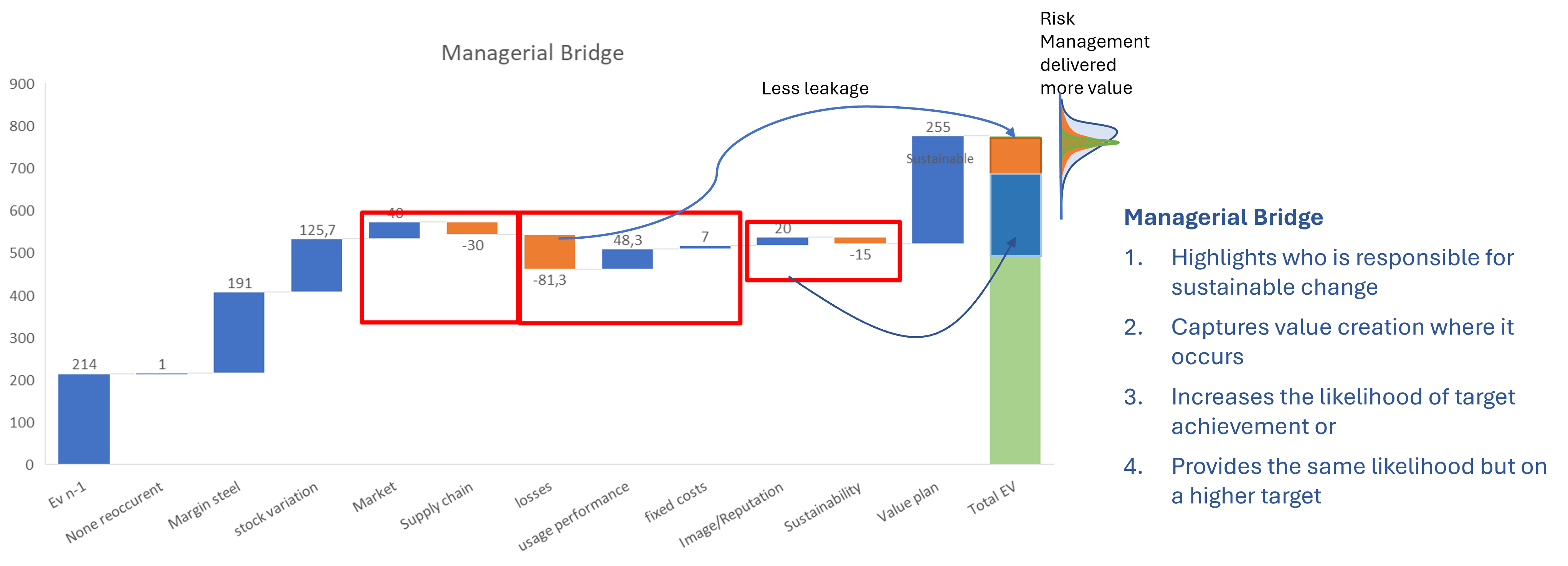
The Valorisation module integrates insight generation into standard management practices to deliver economically sustainable value. It combines both short and long-term perspectives while establishing clear action ownership — addressing the accountability gaps that cause value to leak between planning and delivery.
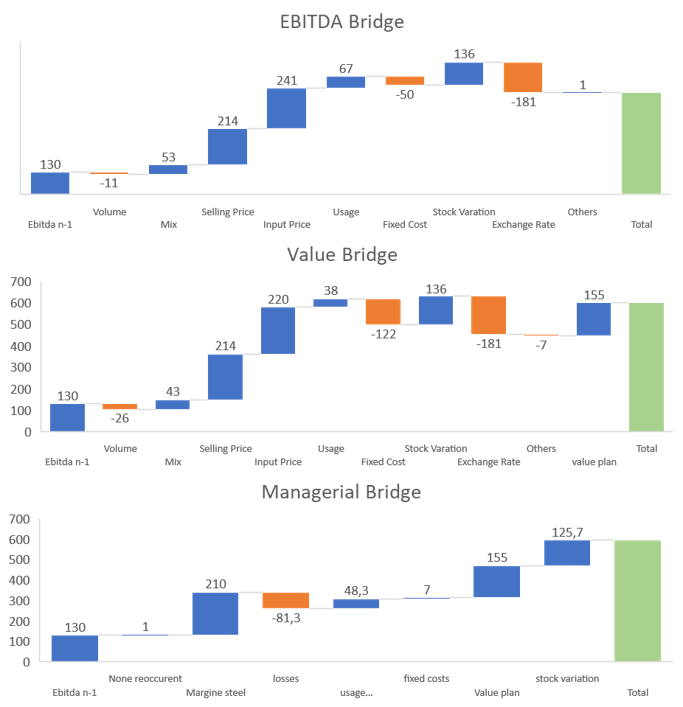
The module operates through a Three-Bridge Analytical Framework that provides progressively deeper insight into where value is created and lost:
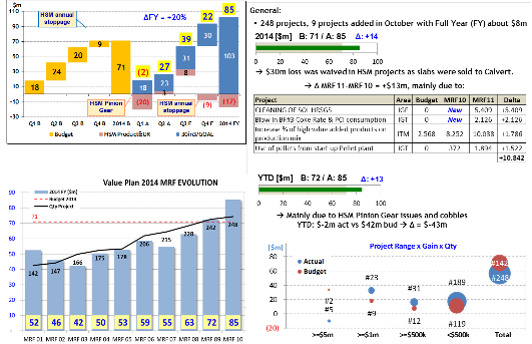
EBITDA Bridge — Presents operations from a purely financial lens, identifying areas like fixed costs and exchange rate impacts requiring intervention. This is the level most organisations already work at — but it is insufficient on its own.
Value Bridge — Demonstrates project-based actions, revealing that fixed costs remain a critical concern area. Bridges the gap between financial reporting and operational reality.
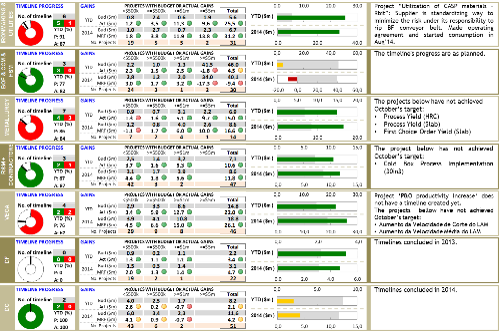
Operational Bridge — Offers the deepest insight by showing that fixed cost issues stem from operational incident losses — enabling teams to pinpoint performance inefficiencies and value leakage sources with precision. This is where real improvement becomes possible.
The module helps organisations achieve performance objectives without requiring substantial capital expenditure — addressing EBITDA leakage challenges through insight and transparent accountability rather than additional investment.
The Lighthouse module is the culmination of the AT-IPIC system. It represents the final, self-sustaining state of performance transformation — "unique in its simplicity and informative in its decision-making strength."
"It continuously looks at the horizon, in all directions, identifying opportunities and risks — making action ownership transparent and ensuring that efforts are sustainable and continuous rather than annual and budgeted."
The Lighthouse system embodies three core functions:
Continuous Horizon Scanning — Continuously looks at the horizon in all directions, identifying both opportunities and risks before they become crises. Unlike reactive reporting systems, the Lighthouse is always scanning forward.
Transparent Accountability — Makes action ownership visible and unambiguous, ensuring that efforts are sustainable and continuous rather than dependent on annual budget cycles or specific individuals. Value that is created becomes embedded knowledge for subsequent improvements.
Forward-Looking Navigation — Looks into the future to give early warning of hazards and helps navigate the complex waters of cognitive bias, uneven playing fields, and wants versus genuine needs. Decision quality improves because the basis for decisions is clearer and more honest.
The Lighthouse methodology operates through dual management focus areas — planning and execution — that function at different speeds, allowing for faster response capability. Once actions deliver confirmed value, they become foundational knowledge for subsequent improvements, creating a continuous cycle of sustainable productivity gains.
Start with the 5 Processes, or contact us to discuss where to enter the system for your specific context.